Multilingual website for DM Transferi Zagreb
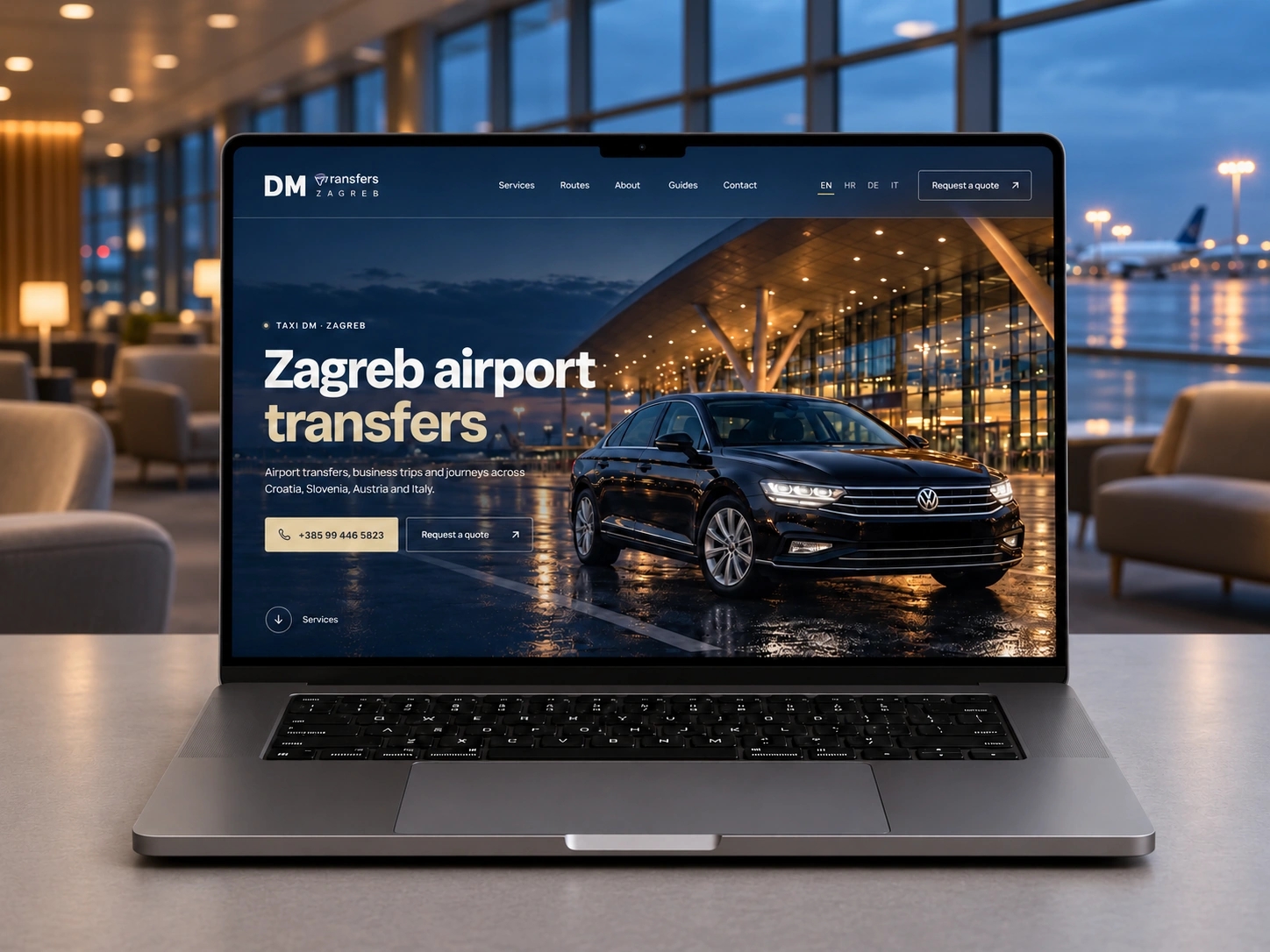
For DM Transferi Zagreb, we created a website for airport, intercity, international and business transfers. Travellers usually arrive with a specific task: they need transport on a particular route and want to know which details to send and how the arrangement will be confirmed.
The website therefore connects services and routes with a clear explanation of the inquiry process. English, Croatian, German and Italian versions support different groups of travellers while retaining the same core message: choose the journey, send the details and agree on the transport.
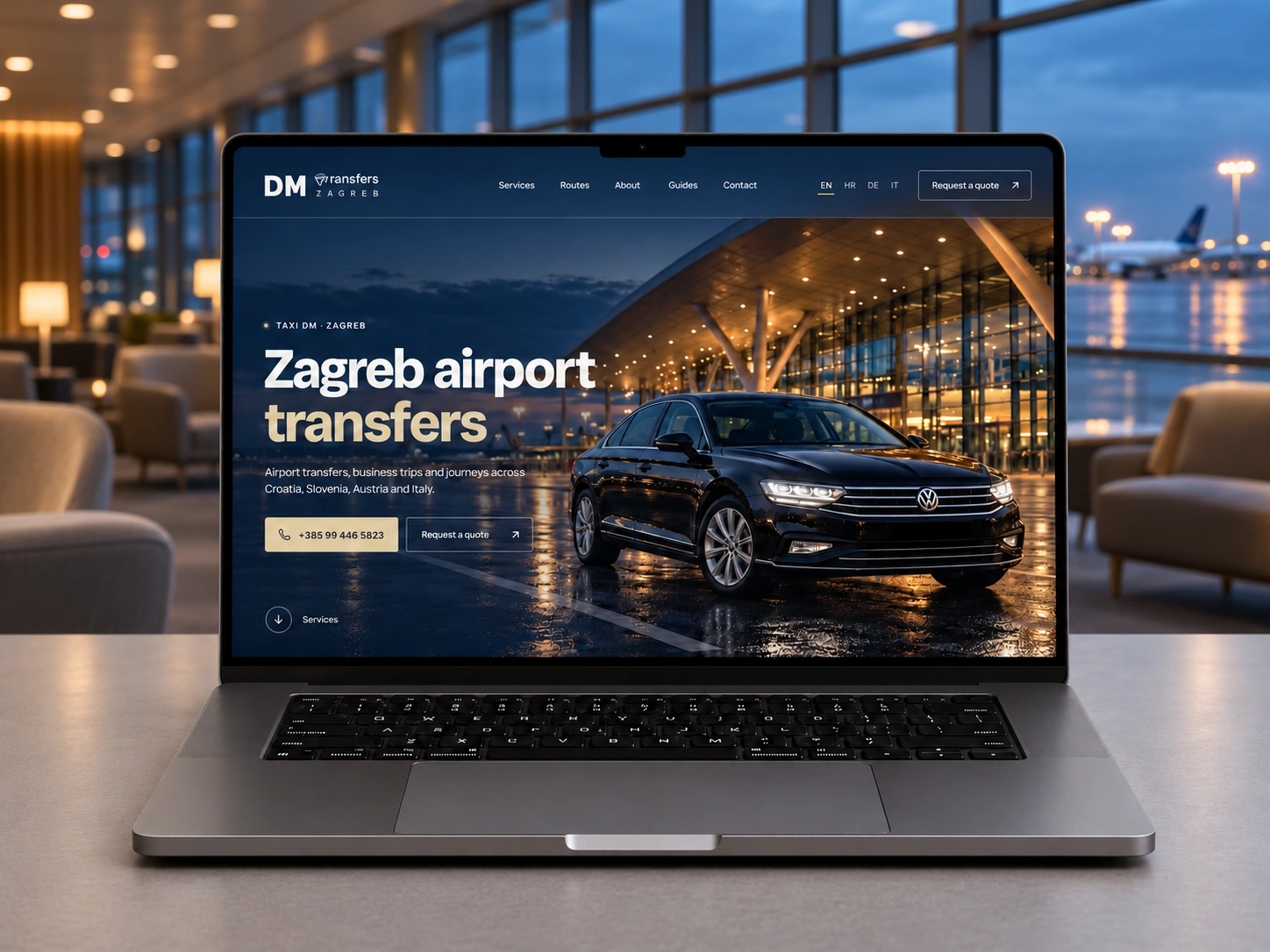
You can view the website here: zagrebairporttransfers.com.
Project goal
The goal was to present transport from Zagreb in a way that makes sense to both local and international travellers. Alongside destinations, the website needed to explain airport transfers, business transport and longer international journeys, including what is required for an assessment and quotation.
- Distinguish transport types and important routes.
- Explain which details a traveller should send for a quotation.
- Connect multiple languages, useful guides and contact.
What we built
Services are separated by the actual reason for travelling: an airport journey, intercity or international transfer, business event or local trip. The route overview adds concrete origins and destinations instead of leaving visitors to infer whether their journey is covered.
The arrangement process is explained in three steps: sending details, checking availability and receiving a quote, then meeting the driver according to the confirmed arrangement. Guides and common questions address luggage, flight details, pricing and late arrivals. This connects practical journey preparation with an inquiry for the service.
User experience
Travellers can start with a service or a particular route. They then see which details support the arrangement: date, time, passenger count, luggage and flight information for airport collection. Contact follows naturally from the information already read rather than appearing as an unrelated final step.
Sending an inquiry is clearly distinguished from a confirmed booking. The final arrangement depends on availability, price and pickup details. This matters in transport because travellers need to know when their time and meeting point are actually confirmed.
Challenge and approach
The challenge was connecting several transport types, destinations and languages without creating an indistinct general offer. Someone planning pickup after a flight has different questions from a business-event organiser or a traveller arranging an international journey.
The approach therefore relies on dedicated service pages, a route overview and practical explanations. Multiple languages follow the same user journey, while contact prompts focus on the details required for a concrete reply.
Result
The result is a multilingual website giving travellers an overview of the options and a clear framework for arranging a transfer. Services, routes, guides and contact are organised around the actual journey, from initial research to sending the necessary details.
What this project shows
A transport website needs more than a list of locations. It should help travellers recognise their route, understand how arrangements work and send a useful inquiry. Aligning language, information and contact makes the offering more concrete, including for people visiting Zagreb for the first time.
Matching the offer to a real journey
A passenger usually arrives with a departure point, destination or flight in mind. The route overview helps them relate the transport offer to that plan. Separate service pages then explain the relevant context: an airport arrival raises different questions from a business event or an international journey. Keeping those explanations distinct gives the visitor somewhere useful to start.
Practical guidance also helps a passenger prepare an inquiry. Flight information, luggage and passenger numbers can affect the discussion, so the website identifies those details before the message is sent. This does not settle every possible journey in advance, but it helps the passenger explain their circumstances and ask questions that apply to their trip.
Making the booking process understandable
The distinction between an inquiry and a confirmed arrangement matters in passenger transport. Sending details starts a discussion; availability, price and pickup arrangements still require confirmation. We included that sequence with the service information so that visitors understand what happens after they get in touch.
The finished website brings service descriptions, route information and practical guidance into the same place. Passengers researching a trip can read the relevant details before sending an inquiry. Those who already know what they need can use the contact information directly. Both routes are useful: the site provides context for someone planning an unfamiliar journey without requiring a returning customer to work through every explanation again. The final transport arrangement follows the direct discussion about availability and the passenger’s travel details.