Website for musician DJ MarINg
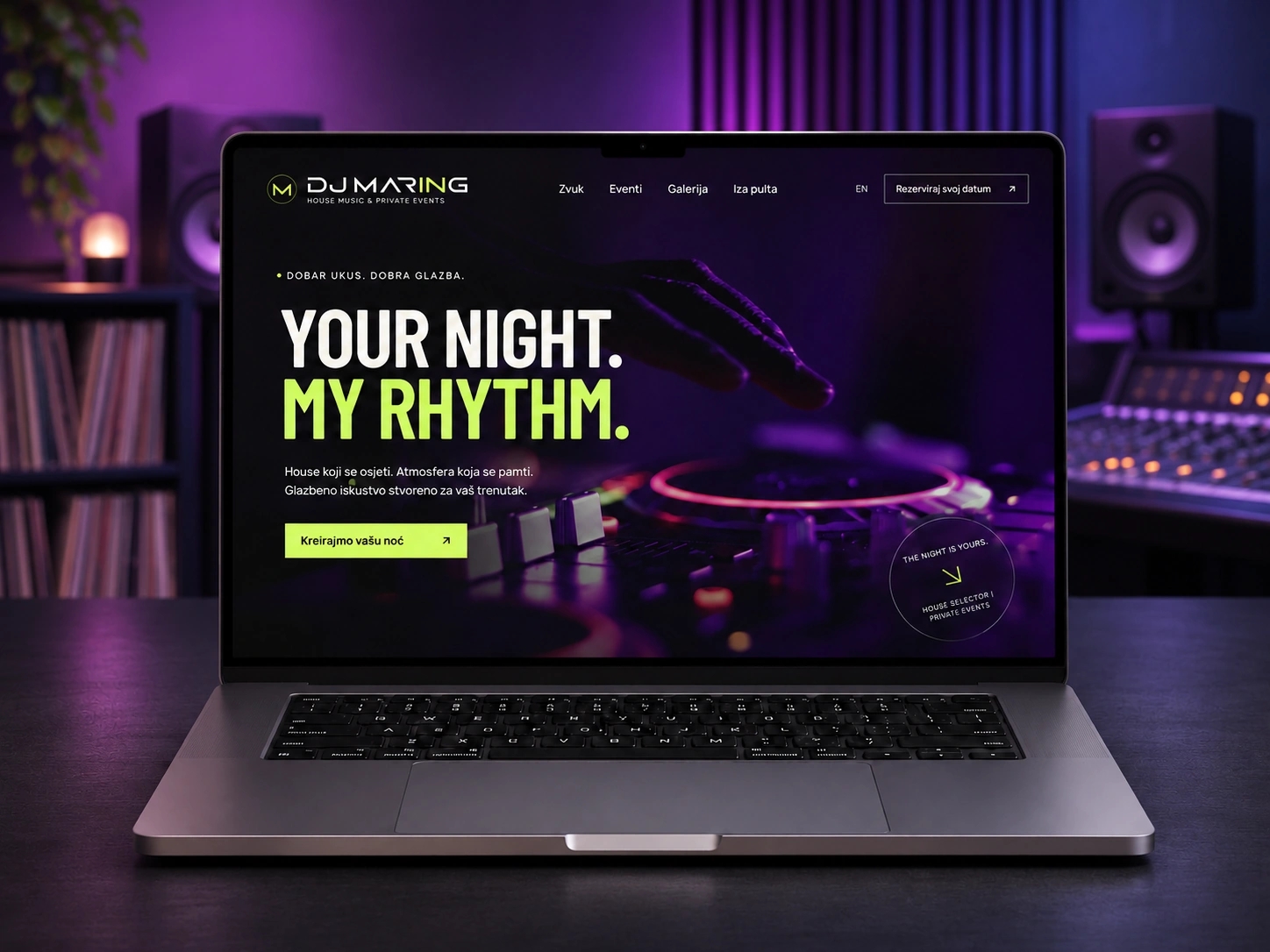
For DJ MarINg, we created a website conveying the character of a house selection and helping organisers imagine the musical atmosphere of their event. Choosing a DJ is not only a question of availability. Clients want to understand whether the sound suits them, how different occasions are approached and what information to send.
The website therefore connects visual presentation, music examples and a practical route towards an inquiry. A private celebration, wedding and brand event are presented as different contexts in which music responds to the space, audience and rhythm of the evening.
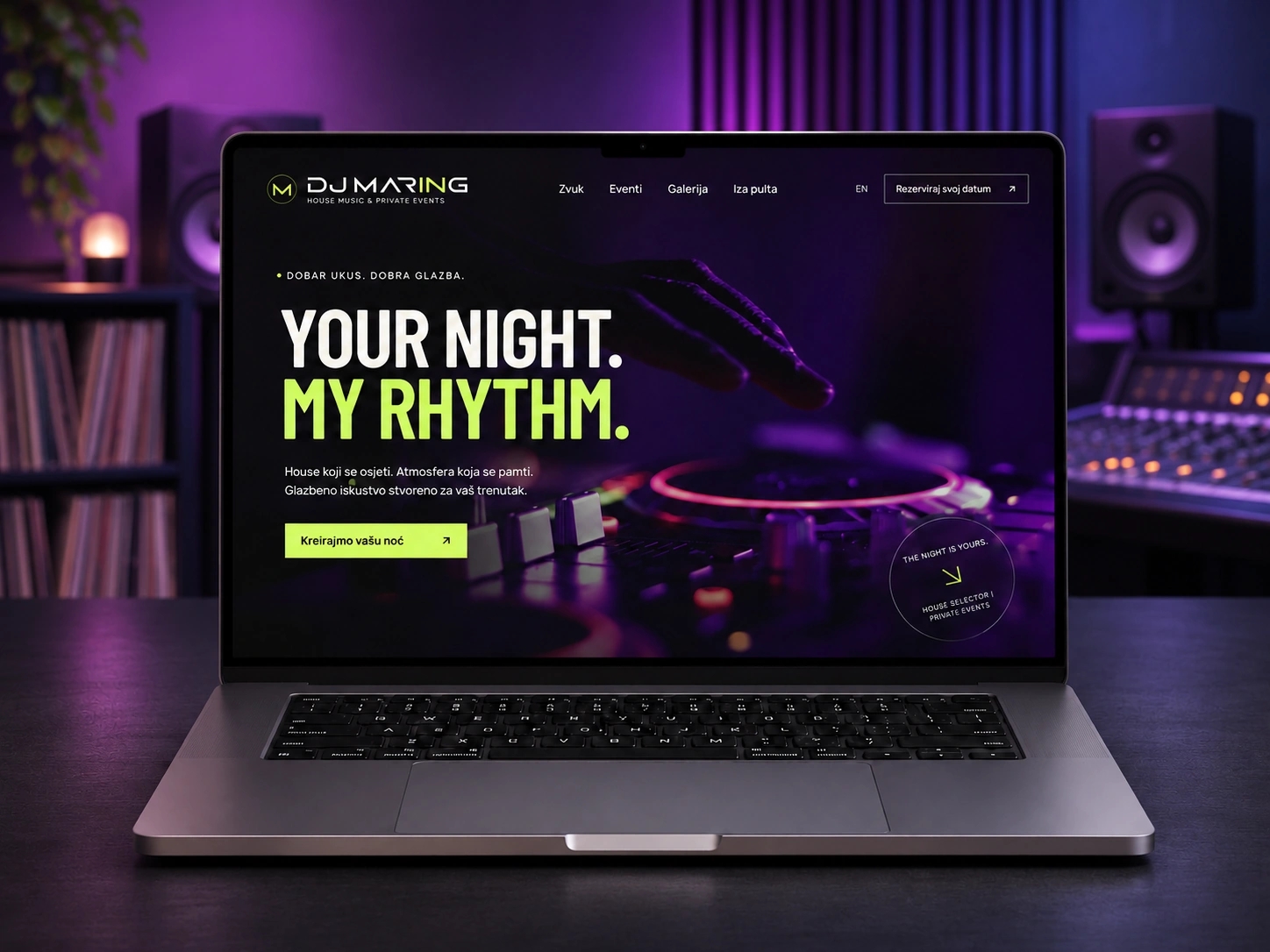
You can view the website here: djmaring.com.
Project goal
The goal was to turn a personal musical signature into a distinctive digital presence that inspires while explaining the offer. The website needs to convey a sense of atmosphere and then provide a straightforward start to a conversation about a particular date and event.
- Present different shades of house through descriptions and demo clips.
- Explain the approach to private celebrations, weddings and brand events.
- Collect the initial details needed for a booking conversation.
What we built
The site leads from its opening message towards musical direction, event types, a visual moodboard and the approach behind the decks. Demo clips let visitors explore the atmosphere before sending an inquiry, while descriptions explain how the energy can develop throughout an evening.
The booking form asks for a name, email, date, event type, location and description of the idea. Common questions also explain musical direction and coordination of equipment with the venue. This connects the creative offer with the details needed for the next conversation.
User experience
Visitors first encounter the sound and aesthetic, then explore the context that matches their occasion. The route to the booking form stays connected with that content, so interest does not end with browsing a gallery.
Visual content is presented as a moodboard and atmospheric inspiration rather than unverified evidence of past performances. Likewise, submitting a booking inquiry begins a conversation rather than claiming that a date is automatically reserved.
Challenge and approach
The challenge is communicating musical atmosphere through a website rather than relying on a generic promise of an unforgettable event. Visual effect alone is insufficient if a client cannot understand the musical direction or arrangement process.
The approach combines an expressive visual language with specific occasion descriptions, music examples and a concise form. The brand retains its character while organisers receive practical information before the first contact.
Result
The result is a website presenting house music as an experience while giving visitors a clear framework for a booking conversation. Sound, event types and contact form part of the same story.
What this project shows
A creative service needs a website that preserves personality without hiding practical questions. When sound and visual identity connect clearly with an inquiry, prospective clients can assess whether that particular approach suits their event.
Presenting a musician through the work
A visitor considering a musician needs more than a photograph and a promise of a memorable event. Audio examples give a more direct introduction to the sound. We placed those examples alongside explanations of the approach to different occasions, allowing organisers to decide whether the style suits their event before asking about availability. Written descriptions support the music rather than trying to replace it.
An organiser may also need to discuss the venue, the evening's schedule or particular preferences. These details cannot be settled by a generic service description. The website provides an introduction and a route to contact, leaving room for a practical conversation about what the performance would involve in that specific setting.
From interest to a useful inquiry
The inquiry form asks for the date, location and type of event because those details establish the starting point for a booking discussion. An open message field lets the organiser explain circumstances that do not fit a category. They can describe the idea in their own words without needing to prepare a technical brief first.
Submitting the form starts a conversation rather than confirming a performance. Availability and the final arrangement still need to be discussed with the musician. Some organisers will first explore the audio examples, while others will read about their type of event and then listen. The website accommodates both approaches. Its role is to introduce DJ MarINg and make the first exchange useful, leaving the personal discussion to establish how a performance would fit the particular venue, audience and schedule.